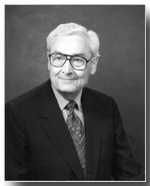
Presentation 7th Cavalry, Ft. Hood, Texas
Webmaster's Note: On October 2, 2003 Friends' Director, Robert
Utley was the keynote speaker at the annual formal ball of the First
Squadron, Seventh Cavalry, at Fort Hood, Texas.
Utley told me, "These guys are still gung-ho. When saluting,
they say 'Garryowen.' I got a thorough tour of one of their 16 big tanks and
16 Bradleys converted for recon purposes. The sophistication is awesome, the
shock probably would be too, against a conventional enemy. As they are the
first to concede, however, their kind of power is not well suited to what is
happening in Iraq. They deploy early next year. Some 700 officers and EM with spouses turned
out in formal attire. They don't wear the usual dress-uniform cap but the
old wide-brimmed cavalry hat with cross sabers and the regimental crest. I
even saw some sporting spurs and asked the Command Sergeant Major about
them. He said they were not an affectation. You had to earn them with a
two-day course in horsemanship."
Thank you, Colonel Salter, for that generous
introduction. Even so, I’m going to have to get a bit autobiographical, as
background for some of the things I want to say.
But for Errol Flynn, I would not be standing here. I
would be a judge somewhere, like the grandfather whose steps I meant to
follow.
None of you were even born when Errol Flynn played
General Custer in “They Died with Their Boots On.” Maybe you’ve seen it on
TV. I was twelve years old, and the time was a month after Pearl Harbor. In
his portrayal of General Custer, Flynn gave me my hero for an adolescent in
wartime America.
I no longer see Custer in such a simplistic image, but
he did turn me from the law to history, and he has lived with me ever since.
In my little Indiana hometown, I scooped ice cream and
earned 25 cents an hour. In the summer of 1946, with the war over, I tapped
my meager savings and bought a bus ticket to Montana. From Billings I rode a
train down to Crow Agency, three miles from the Custer Battlefield. The park
superintendent had agreed to meet me on his mail run.
Cap Edward S. Luce
When I got off the train, there on the platform was a
big, beefy man in the uniform of the NPS. He had a red face and hawk nose
and spoke in a command voice with a heavy Boston accent. What immediately
attracted my attention was his watch fob, a chain bearing the regimental
crest of the 7th Cavalry.
His name was Edward S. Luce, and at some time around
1906 he had been 1st sergeant of Troop B, 7th Cavalry.
What Errol Flynn had started, Cap Luce continued–he had
retired after WW I as a captain. He had ample opportunity because beginning
the next summer, 1947, he hired me as a seasonal park ranger, stationed on
Custer Hill to tell the story of the battle to all who came. I did that for
six summers, all my collegiate years from 1947-52, before canceling my
educational exemption from the draft and letting the army try to make me
into an infantry rifleman.
For six years, with a hero worship of Custer equal to
my own, Cap Luce steeped me in the history and traditions of the 7th
Cavalry. He was not one to see the complexities or nuances of history. Never
a negative word did I hear about either Custer or the regiment.
Cap Luce told many wonderful stories of his military
service. I want to share my favorite with you.
He was the scion of a family
of Boston bluebloods who got tossed out of Harvard Medical School for
engaging in professional boxing. So, to his family’s dismay, he went off and
joined the 7th Cavalry. After his first enlistment he went back to Boston
and got a job as assistant motorman on a street car running in front of the
home of the family to whom he was the black sheep. One day as he reclined
near a window in the car barn, an organ grinder came down the street,
pumping out the lilting strains of Garryowen. As Luce told it, a monkey
jumped in the window with a cup, he threw a nickel in it, and rushed off to
sign up for another hitch in the 7th.
The Boy General
I’m not going to tell you the story of the Little
Bighorn, still less Wounded Knee, also a 7th Cavalry operation. But there
are a couple of points I want to make about the regiment’s frontier service.
We talk about General Custer and the Battle of the
Little Bighorn. Generals usually don’t command regiments. The explanation is
this: He had ended the Civil War a major general of volunteers at age
twenty-five. When the volunteers were mustered out, he reverted to his
regular army rank of captain 5th Cavalry. His mentor, General Phil Sheridan,
saw to it that Custer was appointed lieutenant colonel of one of the four
new cavalry regiments added to the regular army in 1866, the 7th.
In the Civil War, instead of medals, deeds of valor
were recognized by promotions in brevet grades, and Custer held brevets in
every grade up to major general. So for ten years, he signed his name as
lieutenant colonel 7th Cavalry, brevet major general USA. And custom
required an officer to be addressed by his brevet rank. That made for
tremendous confusion, with colonels commanding companies and majors lacking
a brevet commanding battalions.
For ten years General Sheridan kept the colonel of the
7th on detached service, which meant the 7th was Custer’s regiment. That’s
how the public and the army looked on it, and that’s how posterity looks on
it. Actually, other than serving as a lightning rod for factional
squabbling, he had little to do with the military qualities of the regiment.
The companies were scattered all over the plains in little one- and
two-company posts. That meant that the officer who shaped the caliber of the
company was not Custer but the company commander. Good captains had good
companies–e.g. Captain Yates’s so-called “Band Box Troop.” Bad captains had
bad companies. The Little Bighorn was the first time in ten years of history
that all twelve companies had been brought together.
Custer had excelled as a combat leader during the Civil
War. He led his entire brigade, later his entire division. And he led
them–up front where they and the enemy could see his glittering uniform, his
personal flag, and his mounted brass band tootling “Yankee Doodle.” That was
where he gained well-merited fame as a combat commander. On the frontier, he
had no such chance, for only twice before the Little Bighorn had he led even
a part of the 7th in an Indian fight.
Throughout history, I suspect, it has been more or less
true that a unit’s quality owed more to the captain and lieutenants than to
the distant guy with an eagle on his collar. It was true in my time, and
I’ll bet it is true today.
The 7th -- Military
History
At the Little Bighorn, Custer won immortality for
himself and the 7th Cavalry. It is a strange paradox that the pride and
spirit that characterized the regiment to this very day rose from a
catastrophic defeat. Yet there was always this special quality that
animated the 7th through the rest of the frontier years, in the Philippines
at the turn of the century, along the Mexican border during the turmoil of
the Mexican Revolution, and even during the dispirited interwar years, when
the entire army told stories about Tommy Tompkins, the profane,
hard-drinking old horseman with the forked beard who served the 7th in every
grade from second lieutenant to colonel.
So powerful was this identity that in WW II the 7th
Cavalry and its parent First Cavalry Division were allowed to keep the
historic designations even though operating as conventional infantry
divisions.
I well recall while at Custer Battlefield how Luce and
other veterans boasted over and over that the 7th was the first in Manila,
the first in Tokyo, and first in Seoul.
In 1950, at the battlefield, I met an officer who would
become a friend until his death: Colonel Brice C. W. Custer. All but one of
the Custer brothers died at the Little Bighorn, so the descent has been from
farmer Nevin Custer, who stayed home in Michigan. Brice was the finest
looking officer I have ever known, handsome, ramrod erect, and with a chest
full of ribbons, including the Croix de Guerre, beneath his Combat
Infantryman’s Badge. The irony here is that Brice had just returned from
occupation duty in Japan, where he had served as a lieutenant colonel in the
7th Cavalry and at times its commanding officer.
"Wild Bill" Wins Korea
In 1951, at the 75th anniversary of the Little Bighorn,
I met another colonel who would become a friend until his death. This was
Colonel William A. Harris–“Wild Bill” they called him. He was just back from
Korea.
In the late summer of 1950, with the army clinging
precariously to Korea’s Pusan Perimeter, the 7th had not been doing well.
Maj. Gen. Hobart Gay, First Cavalry Division commander, replaced the colonel
with Harris, previously commanding officer of an artillery battalion. With
the breakout from the perimeter, Harris organized two swift-moving armored
task forces and launched the drive toward Seoul.
Much hard fighting lay ahead, but the 7th now acquitted
itself with high distinction. The explanation lay in the new leadership.
Harris did what Custer did: made himself conspicuous. I
call this “cultivated eccentricity.” General Patton did the same thing. For
Harris, as a sort of unconventional swagger stick, he carried a walking
cane. The bumper of his jeep bore a large plywood cutout of the regimental
crest. And somewhere his sergeant major had found an old McClellan cavalry
saddle and mounted it on the hood of the jeep.
Also, Harris paid scrupulous attention to the welfare
of his men. He made certain they had ample rations, warm clothing, and
weapons and ammunition. On Thanksgiving Day 1950 he personally visited every
company mess.
Something of Harris’s unorthodox style is glimpsed in a
message flashed to division headquarters 0300 on September 27, 1950. General
Gay had promised a bottle of champagne for every enemy tank knocked out.
Harris’s message read as follows: “Send 7 bottles of champagne to CO Task
Force 777. Put three more on ice. I’ll get them later. Will continue on
mission.”
I’ll mention another indication of Harris’s leadership.
After he retired a major general and settled in San Antonio, I used to visit
with him when my travels took me there. We would dine at his club, and he
would regale me with recollections of Korea. One I recall in particular.
When he took command, he said, he found an outfit with plummeting morale and
little taste for combat. They had been told they were fighting to save the
world from communism, and they could not relate to that abstraction. Harris
said that’s not what you are fighting for. You are fighting for the honor
and traditions of the 7th Cavalry and all it has meant in American history.
That, he told me, they could relate to. Under Harris, they fought their way
northward with a courage and skill and ultimate triumph that added a
splendid page to the history of the regiment. As one of many signs scattered
around Korea proclaimed: “You are now crossing the 38th parallel, courtesy
of 7th U.S. Cavalry. Garryowen.”
The Battle of Ia Drang
During the 1960s I was with the National Park Service
in Washington, D.C. We watched the Vietnam War unfold on color television. I
was a hawk in those days, before I came to see the folly of our adventure in
Vietnam. I have a vivid memory of the excitement and pride I felt in
November 1965, when we learned of the Battle of Ia Drang, doubly so on
learning that the chief unit involved was the 1st Battalion, 7th Cavalry.
Only later, in the early 1990s, did I come to
understand the valor, tactical skill, and almost indescribable horror of
that clash in the Vietnamese highlands. The book that recounted the battle
in detail was We were Soldiers Once . . . and Young. Maybe most of
you have read it. It was jointly authored by retired Lt. Gen. Harold G.
Moore and Joseph L. Galloway. At Ia Drang Moore commanded 1/7 and Galloway
was a journalist covering the fight. Together they reconstructed the battle
and even returned to Vietnam to interview the Vietnamese commander on the
battlefield.
As a brief summary, about 450 men of 1/7 under Moore, a
lieutenant colonel, were dropped by helicopter into a small clearing in the
Ia Drang Valley. They were at once surrounded by 2,000 North Vietnamese
soldiers. Three days later, a couple of miles away, 2/7 dropped into a
landing zone and were chopped to pieces.
The 7th won the three-day battle against overwhelming
odds but at a cost of 230 dead in the two battalions and the support units
that got them in and out. I can only repeat what General Norman Schwarzkopf
said about this book: “a gut-wrenching account of what war is really all
about.” And Colonel David Hackworth, who usually tells it like it is: “the
best account of infantry combat I have ever read.”
In the Vietnam War, I think there was no bigger, more
violent clash that can be termed “battle” in the usual sense than Ia Drang.
I think there has been none since, certainly not in Iraq. The battle
streamer for Ia Drang on that standard behind me does not begin to convey
what took place in that fight.
If the 7th Cavalry today possesses the same courage,
skill, and ability to take devastating punishment and still win, you are a
truly elite, crack outfit.
I salute you and wish you high success in Iraq.
Garryowen.
(Back
to Top)
|